


Austrian-born and educated, R.M. Schindler laid the foundation for what now is considered California lifestyle of indoor-outdoor living. This documentary explores his richly complex work, with its influences and illuminates Schindler’s philosophy of Space Architecture as contrasted with the International Style. It reexamines Schindler’s complicated relationship with his mentor Frank Lloyd Wright and his rival Richard Neutra. The film affirms the singular genius of one man, and the eternal challenge every artist faces to stay true to their vision in an effort to leave a lasting impact.
Featuring: architects Frank Gehry, Thom Mayne, Steven Holl, Ray Kappe, Mark Mack, Wolf Prix; arch. historians Judith Sheine, Thomas HInes, August Sarnitz; members of Schindler's family, preservationists and owners of Schindler designed houses and many others. Narrated by Meryl Streep.
Since its US premiere at the Architecture & Design Film Festival, New York in 2024, the film enjoyed a prestigious global tour across the festival circuit over 4 continents - 18 countries - 36 cities and was in the official selection of 27 film festivals, receiving several awards - Prix Du Jury des Archis-V from FIFAAC, France; Special Mention from DA2 Zagreb Design, Art & Architecture Film Festival and Best Editing Award from Made by Women Independent Film Festival, Austria.
In November, 2025, Schindler Space Architect achieved a major milestone by qualifying for consideration in the Documentary Feature Film and Original Score categories for the 98th Academy Awards®. While we did not advance to the shortlist, reaching the official longlist is a monumental achievement for an independent production and validates the 12 years of dedication poured into this project.
Schindler Space Architect premiered on PBS SoCal on July 10, 2026, with broadcasts running through July 2027.
Abramorama has acquired North American theatrical rights to Schindler Space Architect. The award-winning documentary is now available for traditional theatrical bookings and Theatrical-On-Demand® via GATHR."
Cargo Film & Releasing handles worldwide sales for the film.
This success proves that R.M. Schindler’s legacy resonates deeply, and it provides a powerful platform for our ongoing promotional campaign.
CAST

MERYL STREEP - NARRATOR
Voiceover
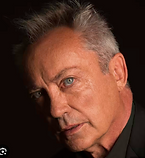
UDO KIER - R. M. SCHINDLER Voiceover
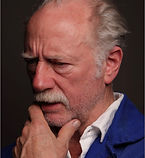

XANDER BERKELEY - F. L. WRIGHT Voiceover
BLAKE LINDSLEY - ESTHER McCOY /ELLEN JANSON/ HARRIET FREEMAN Voiceover
CREATIVE TEAM

Valentina Ganeva - Director/ Producer/ Writer/ Editor
Born in Bulgaria, Valentina B. Ganeva is a graduate of the National Academy for Theatre and Film Arts in Sofia. She holds a BA degree in Film History and Theory and established herself as a freelance film critic for major Bulgarian publications. After relocating to Los Angeles, Valentina worked as a script reader in the development department of Roger Corman’s company, Concord - New Horizons. Following the completion of the UCLA Extension and Avid certification programs, she joined Murex Films, Inc., a Santa Monica-based post-production house, as an executive producer and co-owner. During her tenure, she also built an extensive resume editing music videos, documentaries, commercials, and live concerts. Valentina’s industry expertise includes serving multiple times on the Documentary Juries for the South East European Film Festival (Los Angeles) and the Sofia International Film Festival (Bulgaria). Her lifelong interest in art, architecture, and design, merged with her expertise in video production, culminated in her directorial debut, Schindler Space Architect. Since its premiere at the Architecture and Design Film Festival in New York in 2024, the film has garnered global recognition and won several prestigious awards. On her work on the film, Valentina reflected:
“As a first-time female indie director, I had to overcome many challenges along the way. I wore almost every hat—serving as producer, researcher, writer, director, and editor, while tirelessly fundraising, forging my own vision, and attracting collaborators who were inspired by Schindler and contributed their absolute best. The very thing that makes Schindler difficult to fully grasp—the sheer complexity of his spaces—is also what makes him challenging to film. While mounds of archival text exist, very few firsthand witnesses were still alive, and almost no archival footage existed. As filmmakers, we had to get creative. Werner Herzog once said, 'Every man should pull a boat over a mountain once in his life.' This was my boat, and it took twelve years to complete the mission. In our digital era, Schindler's view of architecture as a cultural product is more relevant than ever. His breakthrough ideas advocated for a culture of design innovation, encouraging experimentation while preserving the environment—a prescient vision that is all the more critical today. This film is my way of giving back, a tribute to a rebel and a true original who was far ahead of his time and never gave up on his vision."


Jacek Laskus, ASC, PSC - Cinematographer
Jacek Laskus graduated from Polish National Film Academy in Lodz. He has worked with directors like Robert Altman, Michael Tolkin, Jonathan Demme and was nominated twice by the ASC for his work on The Caine Mutiny Court-Martial (1988) and Garden Of Redemption (1997). Laskus is a Senior Lecturer at the AFI in Los Angeles. Member of the American Society of Cinematographers since 2000. Member of the Academy of Motion Picture Arts and Sciences since 2025. On his work on Schindler Space Architect, Jacek reflected:
"When thinking about the task of photographing multiple houses designed by Rudolph Schindler I understood that it will be a challenging task. Each house is a bit different, placed in its surrounding in a very connected and organic way. The cinematography had to find the way to be able to do the same, Explore the indoor - outdoor relation. Explore how the light travels through the interiors, and how it shapes them. I also tried to understand what part of a day I would love to spend time in different corners of each house if I would be living there. What fascinated me how well the architectural lines provoked the moving camera, exploring the connections between different rooms and then connecting all to the exteriors. For this I needed a camera with wide rage of exposure, and finding the right time to film there. Some of the spaces were small and required wider lenses, but had to be framed so the lenses would not distort the lines. It was necessary for me to study those interiors and in conversation with Valentina design the proper angles and camera movements. It felt to me like I was always in conversation with the houses through the choices of camera placement and movement and the presence of the light coming through multiple windows. It was discovering those impressions that help me to capture each house with a specific set of imagery defining their beauty."
Danny Ducovny - Co-cinematographer
Danny Ducovny is considered one of the finest commercial directors and cinematographers in the industry. He is famous for launching highly successful worldwide campaigns through his Venice, California-based company, Cucoloris. The recipient of countless awards, he is also the only person to win the Kodak Cinematography Award twice. Danny's work on Schindler Space Architect as a cinematographer was re visualized stills and archival elements as well as creating new "vintage" footage. In his own words:
"I wanted the viewer to be there. to feel it, not to just observe from a distance. With the use of Super 8 and 16 film and vintage lenses on modern digital cameras, I tried to create the illusion of antique footage from the eras. I'm old enough and I've done it long enough for some of these techniques to have been current in my time. I researched looks and methods from the times before me to reenact them in the proper style. "Mistakes" were added, emotion was injected through light plays, mirrors, different backgrounds and styles. trying to always keep it moving, keep it alive. The use of a 50/50 mirror allowed the superimposition of Schindler in print form with other images to put him in "there", in his own environment. LED light that color changed and dimmed, allowed for experimentation of light plays on stills to make them seem animated. It was a deep bag of tricks - toy cars, miniature trees. An iris shutter helped realize Schindler's own photographs along with purchasing an old Kodak graflex much like the one he used. I wanted to go on his journey with him. Experience it with him. All of it was done just Valentina and me, mostly at my makeshift studio at the beach. Here we were surrounded with background surfaces, colors, sunset and water, reflective mirrors and sparkly elements to recreate the California experience that he had. There was no bosses, no crew, no time limits. I, in all my years had never worked like that. It was experimentation and much on the day in real time. It was very rewarding and I hope I helped to bring you the viewer into his world".
Gerald V. Casale - Co-writer
Founder, co-principal songwriter and a vocalist for the new wave band, DEVO. Gerald is also an award-winning music video/commercial director and avid art collector. He was part of the creative team behind the restoration of Richard Neutra’s Kun House in Los Angeles built in 1933. On his contribution to the narration for "Schindler Space Architect", Gerald said:
"Long a student of mid-century modern architecture, my writing and research contributions for Valentina Ganeva's definitive documentary on the life and work of RM Schindler were a labour of love. Her compelling study on Schindler's overlooked genius establishes his rightful place in the history of modern architecture and the cultural revolution his vision spawned. I was honored to be part of her epic creative journey."
Mark Tschanz - Composer
Mark Tschanz is a Los Angeles based composer, songwriter, and guitarist. After spending several years as a songwriter with EMI Publishing UK in London, he transitioned to composing for independent motion pictures, two contemporary ballets, and numerous commercials. Since moving back moved to Los Angeles, Mark has contributed guitar work to Danny Elfman's score for "Fifty Shades of Grey". His songs and additional music have also been featured in films such as "Stealing Beauty” and "Waltzing with Brando”. On his score for "Schindler Space Architect", Mark reflects:
"I felt that the function of the score was to maintain a cohesive flow and pace for the story, in spite of the different eras represented, while still giving each building its own musical space. The omnipresence of voiceovers also meant that the score needed to remain at a controlled volume level. It had to avoid the "background music" trap as well as an overly patchy sequence of individual themes. Whenever possible , I allowed elements of one building's music to partially overlap into the next before fading away as the subsequent building appeared, keeping that cycle going as organically as possible."
PRODUCING TEAM
EXECUTIVE PRODUCERS
James Rega
Harriet Hubbard
Danny Ducovny
Bernard Friedman
Stephen Nemeth
ASSOCIATE PRODUCERS
Jill Mazursky
Harriett Gold
Debra Spark